
To engineer the perfect filtration system, you first have to understand the chemistry of the source. Discover exactly what flows through the North Saskatchewan River and into your home.
All of Edmonton’s drinking water is drawn from the North Saskatchewan River. While it’s a beautiful natural resource, it is a dynamic ecosystem subject to massive seasonal changes.
During the spring runoff, melting snow pulls massive amounts of silt, clay, and organic matter into the river. This phenomenon, known as high turbidity, forces municipal treatment plants to radically increase their chemical dosing to maintain safety standards.
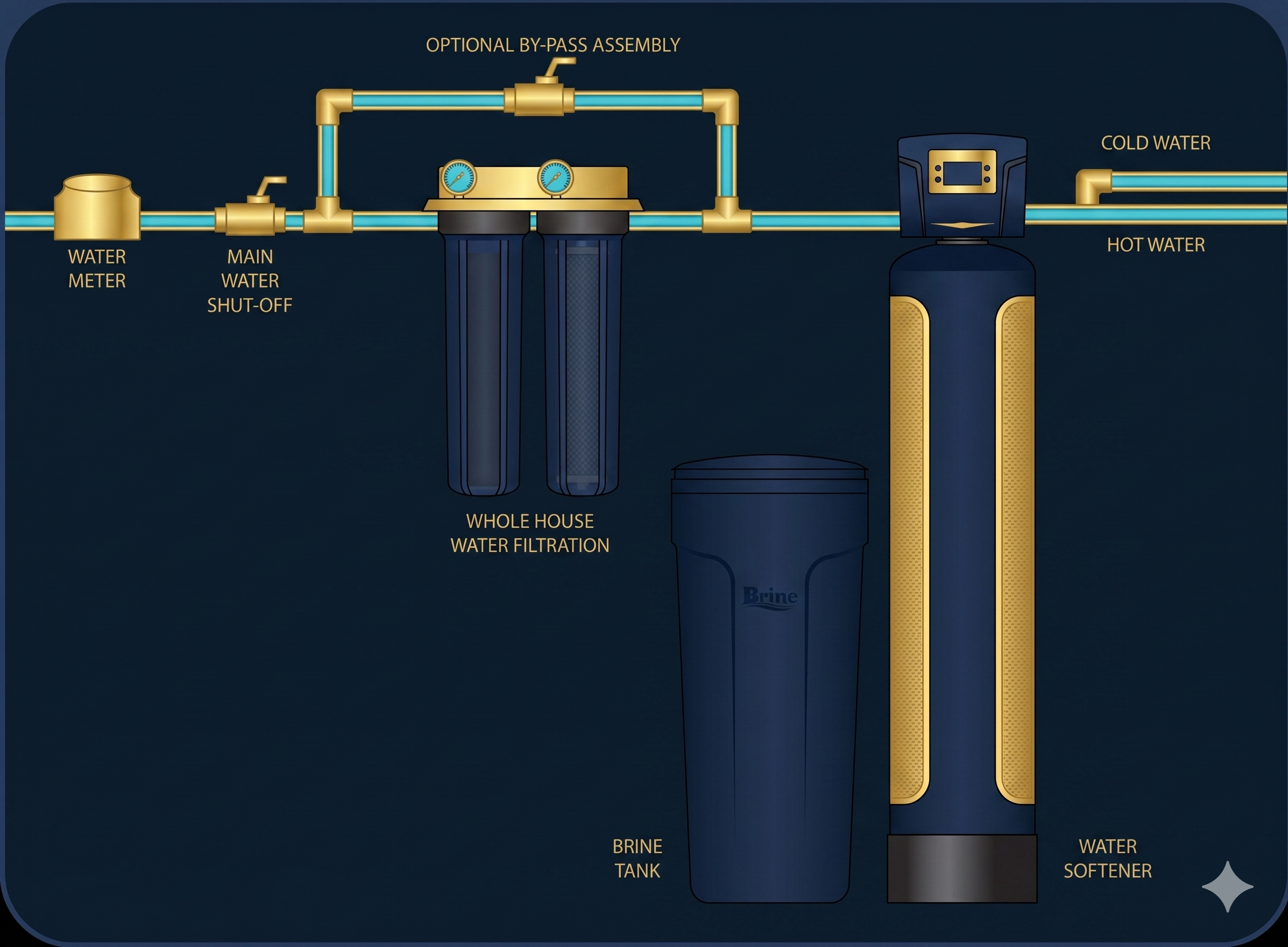
Our municipal facilities do an excellent job keeping the water safe, but "safe" does not mean "pure" or "luxurious." Here are the three main molecular challenges we solve.
To kill bacteria, Edmonton injects chloramine—a toxic bond of chlorine and ammonia. It resists dissipation, meaning it arrives strong at your tap. It causes foul smells, dries out your skin, and affects the taste of your cooking.
Edmonton has incredibly "hard" water, regularly exceeding 180 mg/L. These dissolved minerals crystalize inside your plumbing when heated, creating scale that destroys water heaters, clogs showerheads, and ruins dishwashers.
Microscopic dirt, rust from aging municipal pipes, and organic compounds make their way into your home. These abrasive particles wear down fixtures over time and contribute to cloudy, unappealing drinking water.
You can't control the municipal water main, but you can control what enters your home's boundaries. EWF deploys multi-stage technological defenses.